Scientific Conference on the Development Strategy of Hanoi Metropolitan University to 2035, with a Vision to 2045
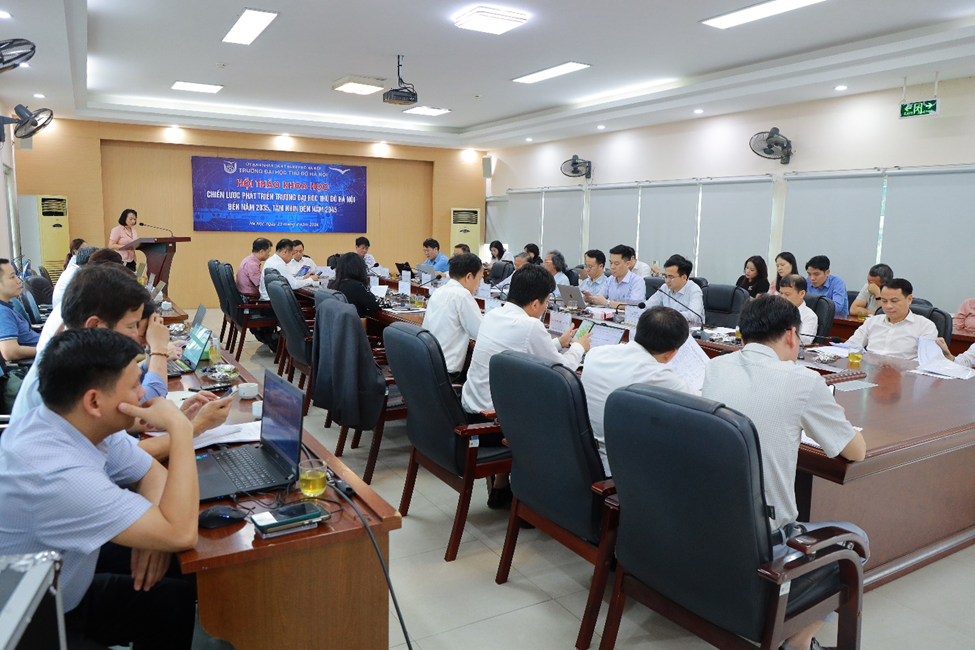
Overview of the conference.
On April 23, 2026, Hanoi Metropolitan University organized the scientific conference “Development Strategy of Hanoi Metropolitan University to 2035, with a Vision to 2045,” attracting the participation of numerous experts, scholars, and administrators. The conference served as an important forum to refine the University’s development orientation for the new era.
The conference featured presentations offering profound scientific perspectives closely aligned with the nation’s educational development direction and Hanoi’s 100-year capital development vision. Contributors included Professor Dr. Pham Hong Quang (Thai Nguyen University), Professor Dr. Nguyen Quang Ngoc (Vietnam National University, Hanoi), Professor Dr. Nguyen Thi Hoang Yen (National Academy of Education Management), Professor Dr. Dang Van Soa (Hanoi University of Economics and Technology), Professor Dr. Mai Van Hung (Vietnam National University), Professor Dr. Dinh Tuan Hai (Hanoi Architectural University), Associate Professor Dr. Nguyen Huu Quynh (CMC University), Dr. Le Duy Khuong (Vietnam National University, Hanoi), leaders from universities and colleges across Hanoi, and representatives from departments, agencies, and sectors.
Representing Hanoi Metropolitan University, the conference was attended and chaired by Associate Professor Dr. Do Hong Cuong, President of the University, along with Dr. Bui Quoc Hoan, Vice President; Associate Professor Dr. Nguyen Van Tuan, Vice President; and leaders of the University’s departments.
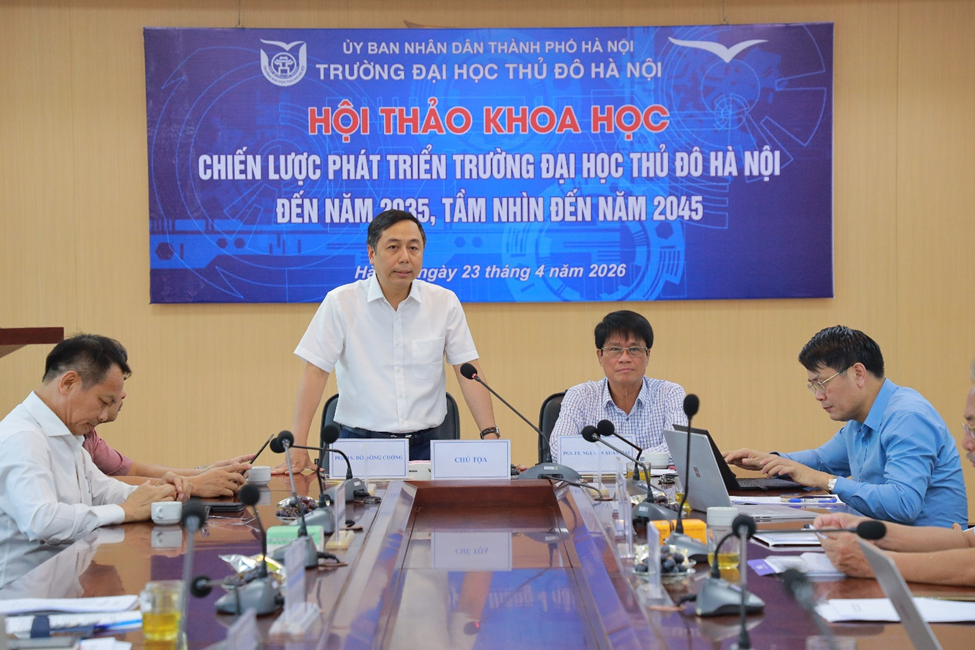
Associate Professor Dr. Do Hong Cuong, President of the University, delivers the opening speech.
In his opening remarks, Associate Professor Dr. Do Hong Cuong emphasized that Vietnam is entering a new development phase requiring accelerated digital transformation, international integration, and enhanced human resource quality. In this context, higher education institutions, especially local universities, must define clear long-term development strategies aligned with Hanoi’s capital development orientation.
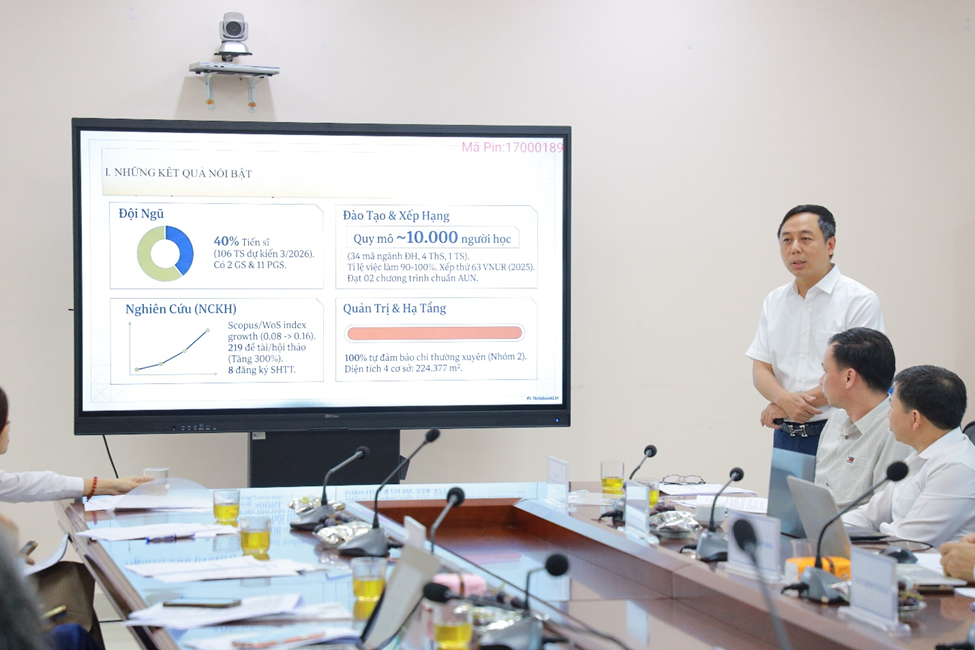
Associate Professor Dr. Do Hong Cuong presents the draft development strategy to 2035, with a vision to 2045.
At the conference, Associate Professor Dr. Do Hong Cuong presented the University’s draft development strategy to 2035, with a vision to 2045. The report outlined the goal of transforming Hanoi Metropolitan University into a prestigious center for education, research, and innovation, directly serving the development of Hanoi and the nation.
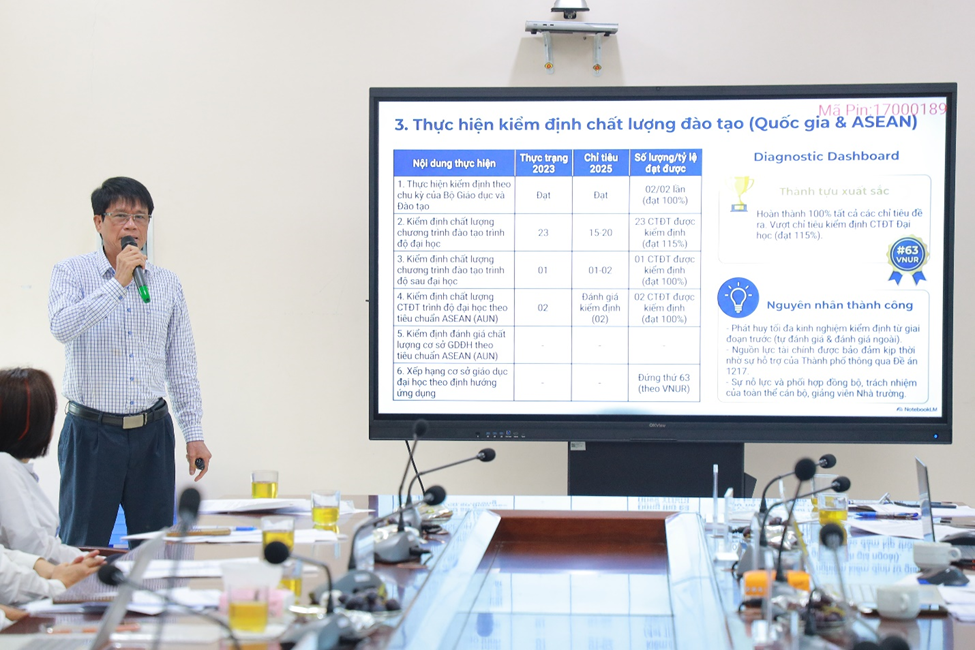
Associate Professor Dr. Nguyen Xuan Hai presents an evaluation report on the implementation of development targets for the 2024–2025 period.
In addition, Associate Professor Dr. Nguyen Xuan Hai presented an assessment of the implementation of the University’s strategic objectives, tasks, and indicators for 2024–2025. The report showed that while the University has largely achieved many of its targets, several indicators remain incomplete or require updates to reflect the evolving context of Hanoi and the country, calling for appropriate adjustments in the next development stage.
The reports also highlighted important lessons learned and proposed key solution groups, emphasizing the need to improve university governance toward autonomy and modernization; innovate academic programs linked to strategic disciplines; strengthen scientific research aligned with Hanoi’s practical needs; expand international cooperation; and accelerate digital transformation in education.
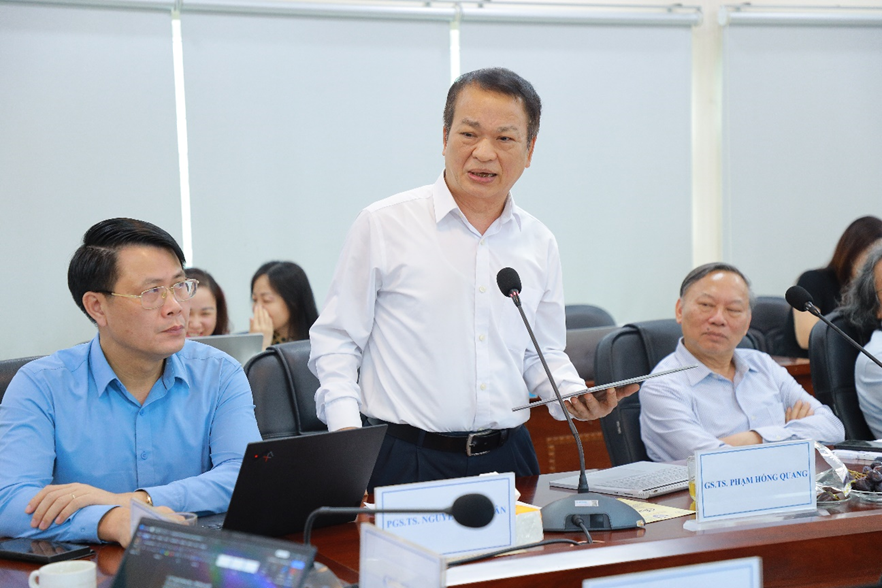
Professor Dr. Pham Hong Quang (Thai Nguyen University) contributes recommendations on the University’s future development strategy.
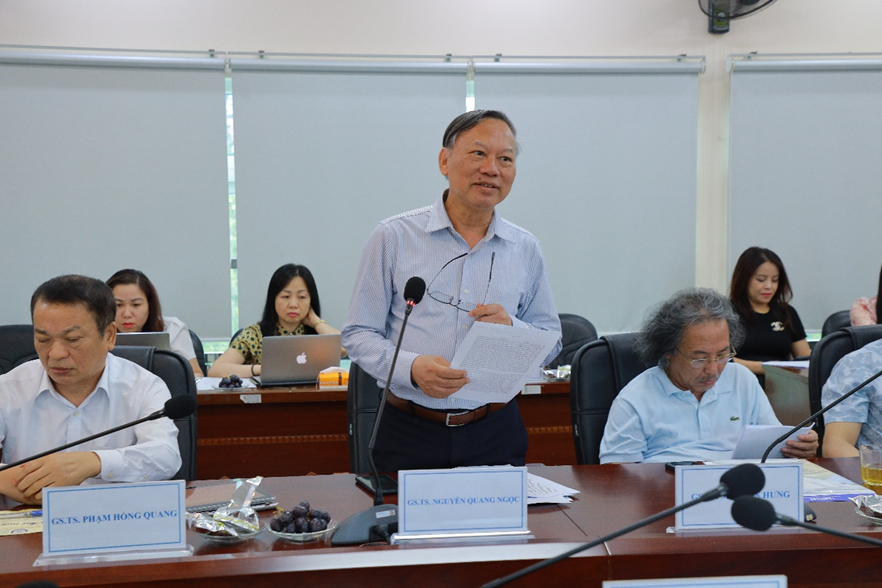
Professor Dr. Nguyen Quang Ngoc (Vietnam National University, Hanoi) shares strategic insights for the University’s next development phase.
Many experts also stressed essential requirements for the University’s future strategy, including prioritizing distinctive fields such as Hanoi Studies, Cultural Studies, and cultural industries; advancing technological applications, particularly artificial intelligence, in education toward a “smart university” model with personalized learning; and strengthening collaboration between the University, city authorities, and the business community to enhance practical application and social responsiveness.
Furthermore, building a modern, open, and internationally integrated educational ecosystem was identified as a foundational factor in improving educational quality, advancing scientific research, and gradually affirming Hanoi Metropolitan University’s position within the higher education system.