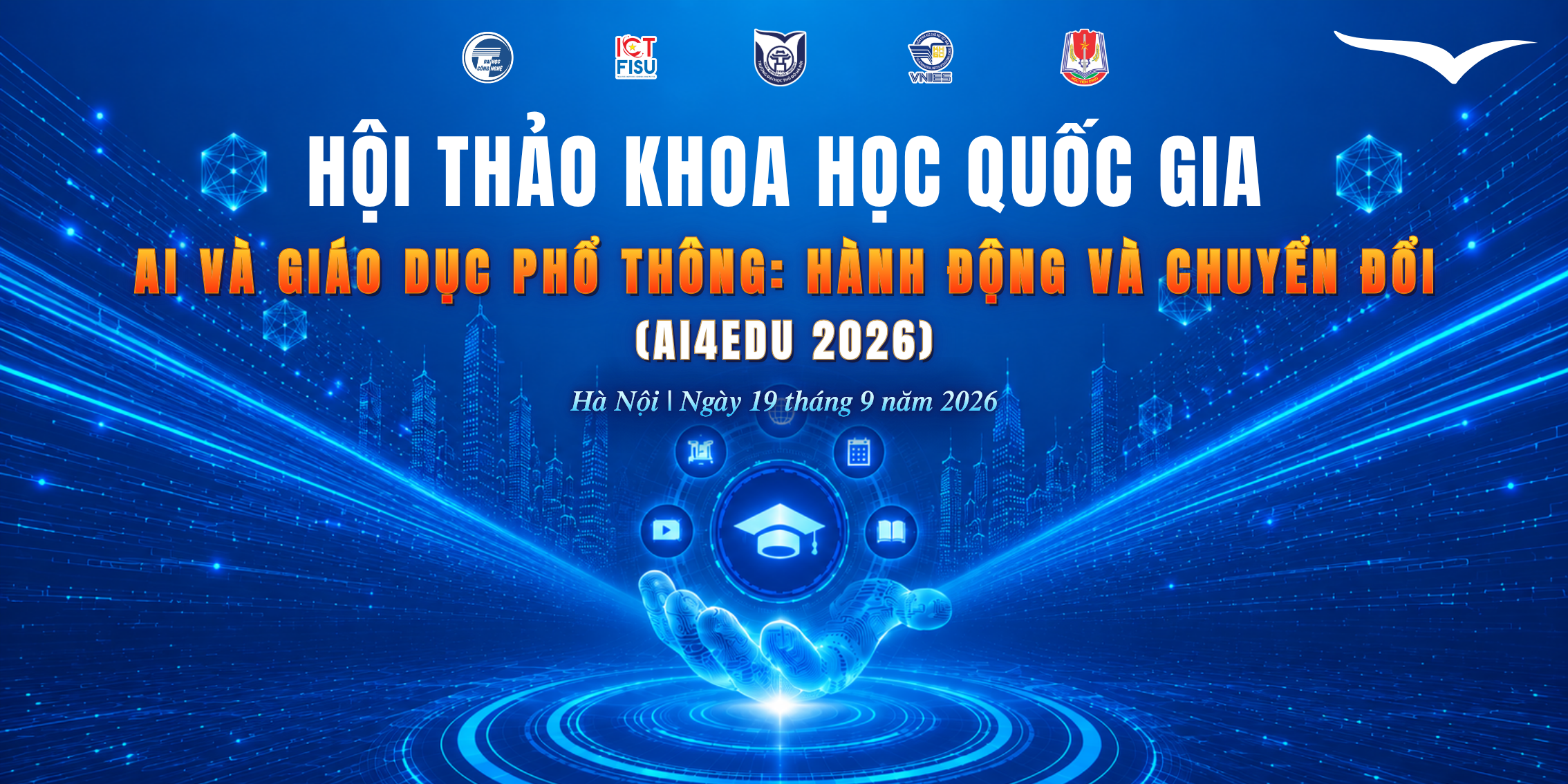
AI4EDU 2026 Conference on Artificial Intelligence and General Education: Connecting Action, Advancing Transformation
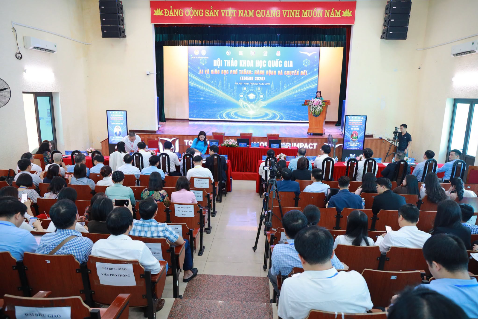
Overview of the Conference.
The Conference took place in the context of AI education in Vietnam transitioning from pilot initiatives to systematic implementation. On August 18, 2026, the Ministry of Education and Training issued Decision No. 2422/QĐ-BGDĐT on the Framework for Artificial Intelligence Education Content for General Education Students. Accordingly, the central issue is no longer simply whether students should have access to AI, but rather what should be taught about AI, how teaching and assessment should be organized, and how AI use should be governed in order to develop learners’ competencies while preserving independent thinking, academic integrity, and responsibility.
Following AI4EDU 2025, AI4EDU 2026 was co-hosted by Hanoi Metropolitan University, FISU Vietnam, VNU University of Engineering and Technology, and the People’s Police Academy. The Hanoi Department of Science and Technology and the Hanoi Department of Education and Training participated in organizing the Conference. The event was supported by the Hanoi People’s Committee and the Institute for Education Strategy and Policy under the Ministry of Education and Training. The participation of these stakeholders reflected an interdisciplinary spirit connecting policy, research, education and training, technology, and practical school contexts.
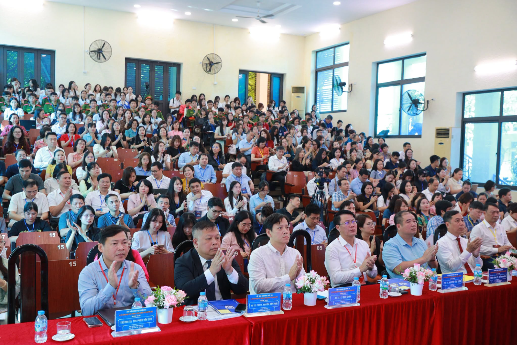
Delegates attending the Conference.
The morning plenary session was chaired by Assoc. Prof. Dr. Do Hong Cuong, Rector of Hanoi Metropolitan University; Major General, Dr. Chu Van Dung, Deputy Director of the People’s Police Academy; and Assoc. Prof. Dr. Bui Thu Lam, Vice President and Secretary General of FISU Vietnam. In his keynote address, Assoc. Prof. Dr. Do Hong Cuong emphasized the need to move from the stage of identifying issues and conducting pilot initiatives toward systematic action, with a focus on developing AI competencies, implementing the AI education framework through appropriate roadmaps, integrating teaching about AI, teaching with AI, and AI governance, strengthening multi-stakeholder coordination, maintaining a human-centered approach, and assessing outcomes based on evidence.
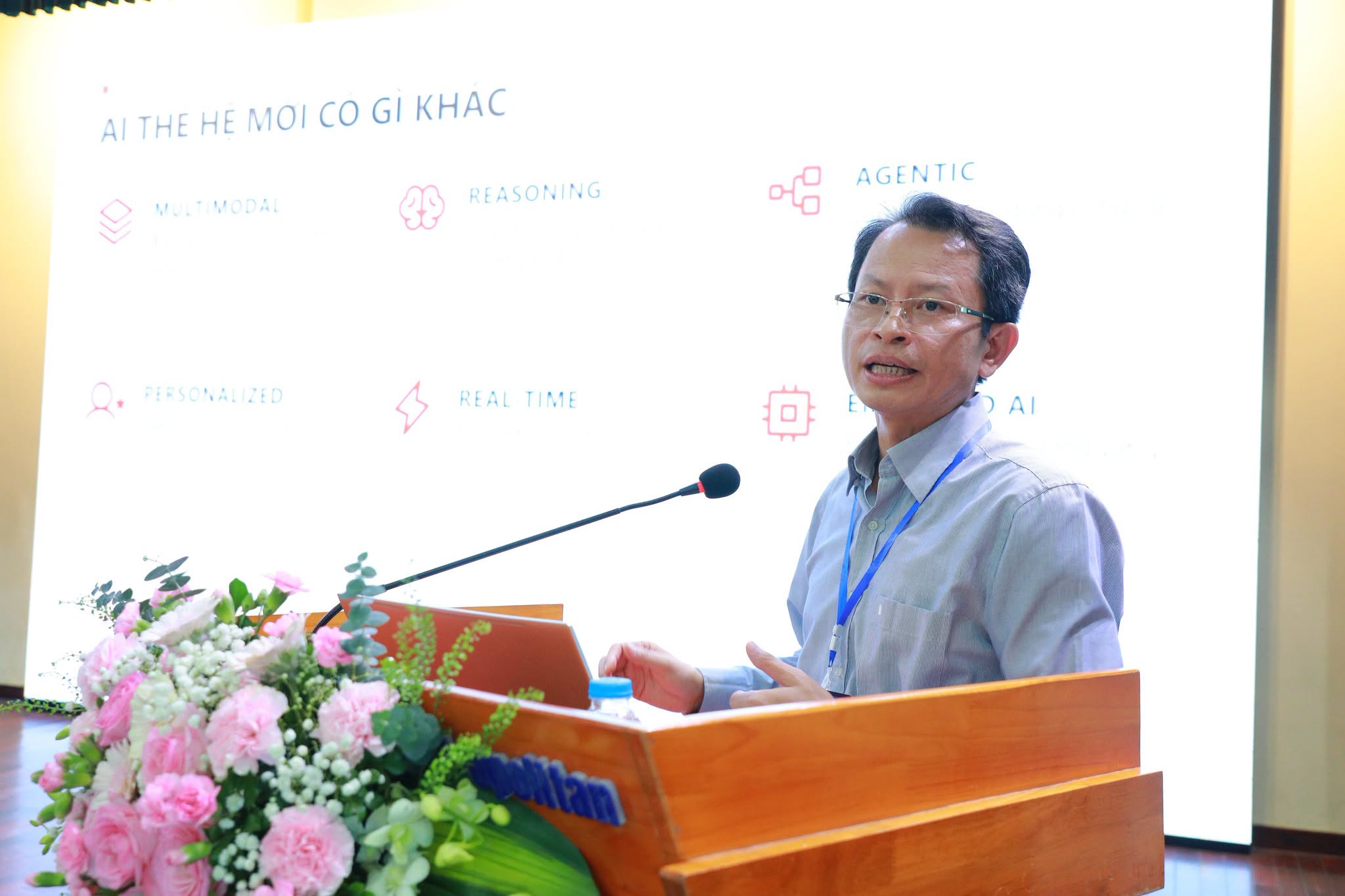
Assoc. Prof. Dr. Bui Thu Lam, Vice President and Secretary General of FISU Vietnam, presents a report at the Conference.
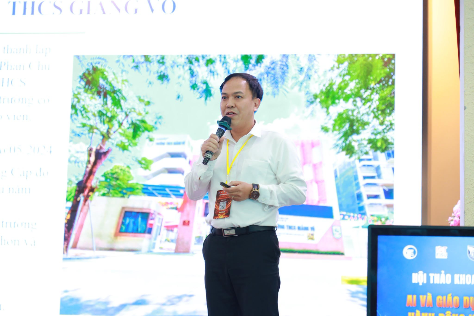
Dr. Vu Dinh Phuong, Vice Principal of Giang Vo Lower Secondary School, shares insights into the application of artificial intelligence in general education through the digital transformation model being implemented at the school.
The presentations in the plenary session approached the topic from various perspectives, including trends in next-generation AI and their impact on education, AI education for general education students, innovation in teaching and learning, the application of AI and digital data in education, preventing violations of traffic order and safety regulations among students, and the practical experience of digital transformation at Giang Vo Lower Secondary School. These discussions positioned AI education within the interconnected context of policy, pedagogy, technology, data, and school governance.
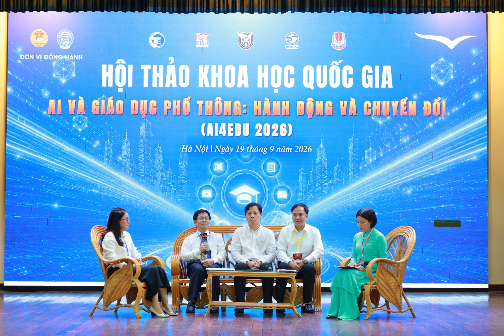
Panel discussion on “AI & General Education: Action and Transformation”.
The panel discussion “AI & General Education: Action and Transformation” was chaired by Prof. Dr. Nguyen Thanh Thuy, President of FISU Vietnam, and Prof. Dr. Le Anh Vinh, Director of the Institute for Education Strategy and Policy, Ministry of Education and Training, with Dr. Hoang Thi Mai, Dean of the Faculty of Mathematics and Information Technology, Hanoi Metropolitan University, serving as moderator. The discussion featured Dr. Vu Dinh Phuong, Vice Principal of Giang Vo Lower Secondary School, Hanoi, and Ms. Ngo To Hoa, Country Director of iGroup (Asia Pacific) Limited. The panel focused on the roadmap for putting the AI education content framework into practice, developing teacher and student competencies, innovating teaching and assessment, data governance, personal data protection, AI ethics and safety, and mechanisms for coordination among stakeholders.
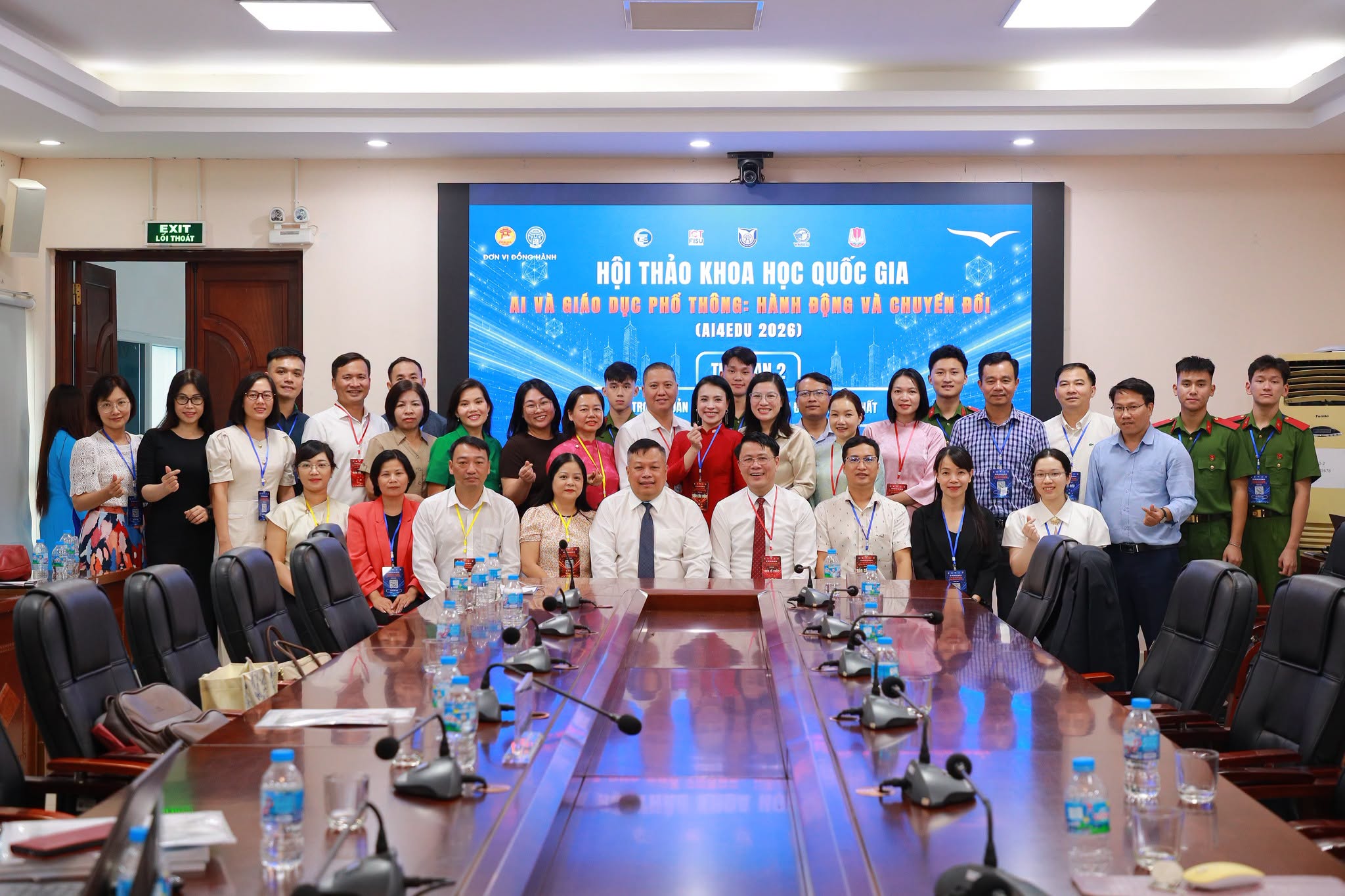
The thematic session on AI in teaching and learning and AI in educational management.
In the afternoon, the Conference organized two thematic sessions on AI in teaching and learning and AI in educational management. The presentations explored AI education from the content framework to practical implementation, computational thinking, learning-support chatbots, AI for educational equity, responsible AI governance, AI in quality management, digital competency development, and ensuring the safety of students’ personal data. The three major areas of action—AI in teaching, AI in learning, and AI in educational management—were therefore examined from the perspectives of research, policy, and practical school implementation.
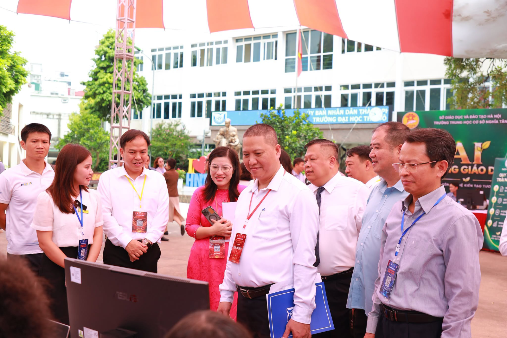
AI in Education exhibition booths of lower secondary schools in the area.
Alongside the academic sessions, the AI in Education exhibition provided a space for delegates to explore smart teaching and learning solutions, student products, and content related to AI ethics, helping connect academic discussions with practical implementation.
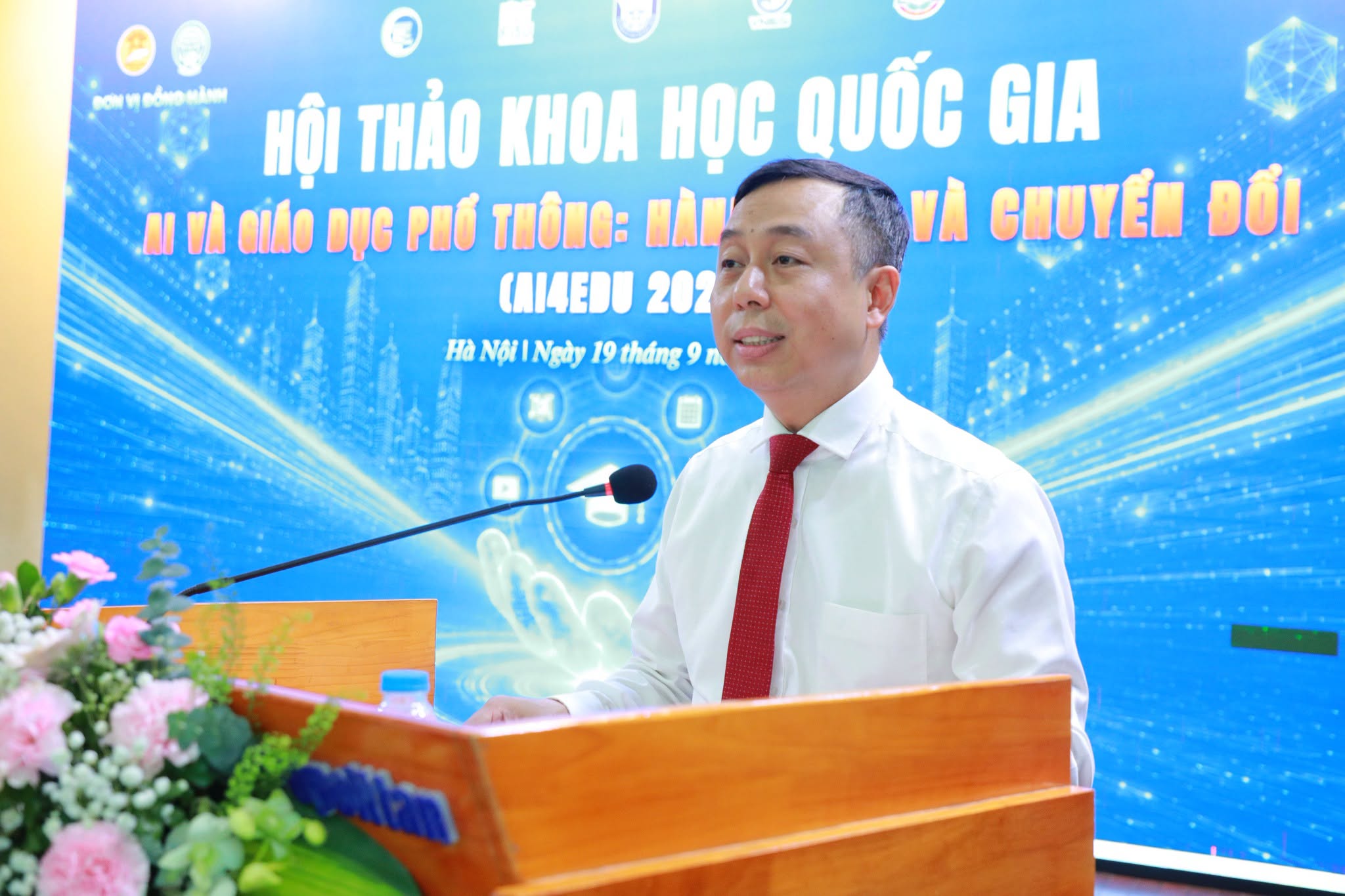
Assoc. Prof. Dr. Do Hong Cuong, Rector of Hanoi Metropolitan University, delivers the concluding remarks at the Conference.
Concluding the Conference, Assoc. Prof. Dr. Do Hong Cuong outlined six key orientations: preparing students to understand, evaluate, and create with AI and to use AI responsibly; implementing AI education through a systematic roadmap from primary to upper secondary education; regarding AI as a pedagogical collaborator while ensuring that teachers remain the key actors and retain final pedagogical decision-making authority; initiating transformation from educational challenges rather than from technology itself; recognizing that investing in AI first and foremost means investing in people; and building an ecosystem of joint action among management agencies, research and training institutions, general education schools, and businesses. In this spirit, AI4EDU 2026 aims to continue transforming the outcomes of discussions into research, pilot models, and concrete cooperation networks, while developing AI4EDU into a regular academic and practice-oriented forum that strengthens connections among research, policy, and educational practice. The spirit of the Conference can be encapsulated in three messages: Understand AI correctly, act responsibly, and drive meaningful transformation.