EXPANDING EDUCATIONAL COOPERATION, FOSTERING CULTURAL CONNECTIONS, TOWARDS SUSTAINABLE DEVELOPMENT
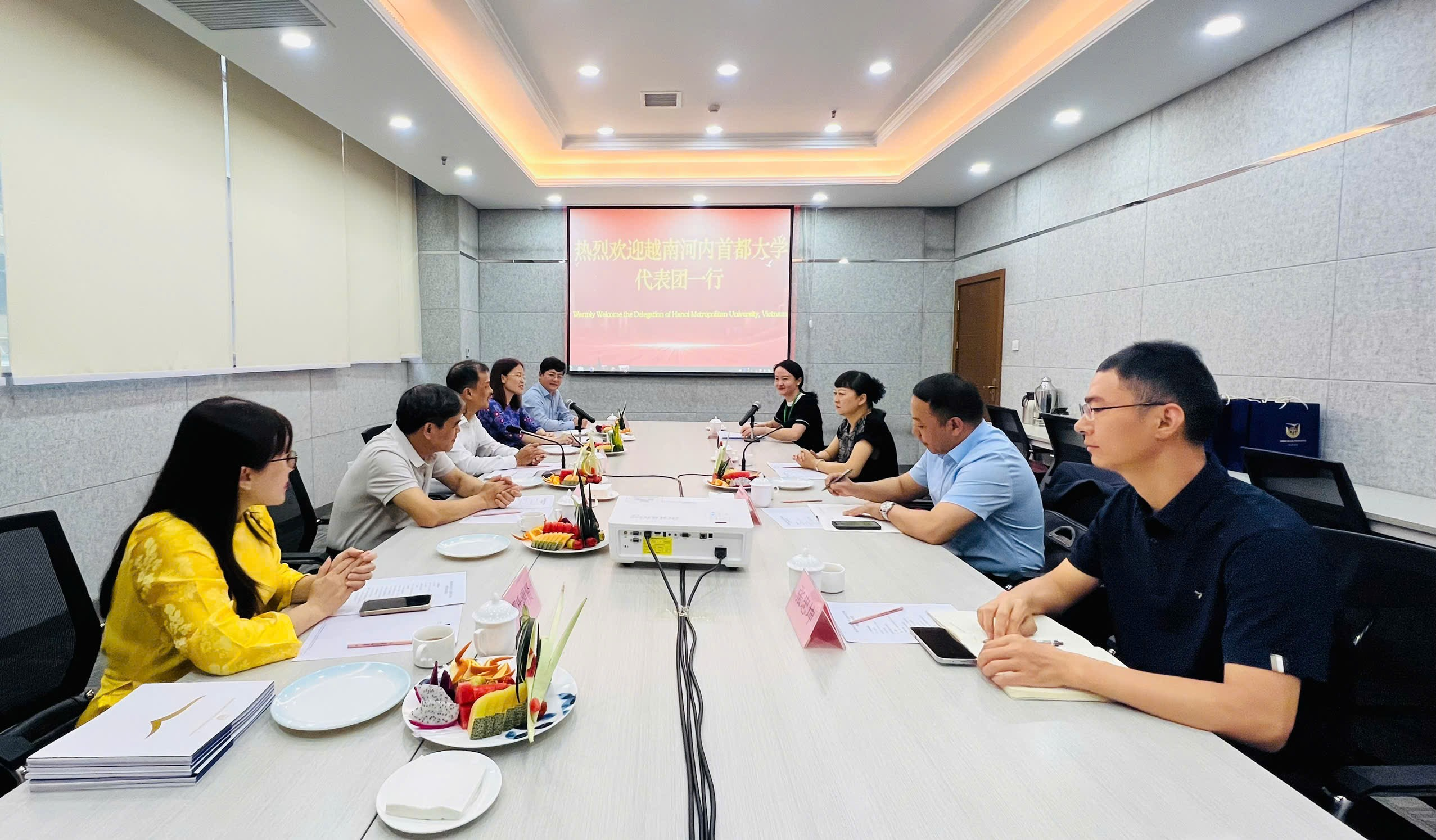 The delegation was led by Dr. Bui Quoc Hoan – Vice President of Hanoi Metropolitan University. The delegation included Assoc. Prof. Dr. Vu Cong Hao – Dean of the Faculty of Social Sciences and Humanities; Dr. Bui Van Tuan – Vice Director of the Institute of Hanoi Studies and International Training; Dr. Dang Thi Minh Hien – Dean of the Faculty of Economics and Tourism; and Dr. Nguyen Thi Thanh Hue – Vice Dean of the Faculty of Foreign Languages. Receiving and working with the delegation, representatives from Kunming Chinese Language School included Ms. Tran Na – President; Mr. Doan Kien Quan – Vice President; Ms. Yao Jiao – Head of the Admissions Office, together with leaders and representatives of specialized units and functional departments of the School.
Building on a foundation of cooperation and expanding development perspectives
At the working session, Dr. Bui Quoc Hoan introduced an overview of the formation, development process, training scale, and strategic orientations of Hanoi Metropolitan University. As a public university of the capital city, the University is gradually developing an application-oriented university model, promoting scientific research, digital transformation, and international integration, with the goal of training human resources equipped with professional competence, international integration skills, and social responsibility.
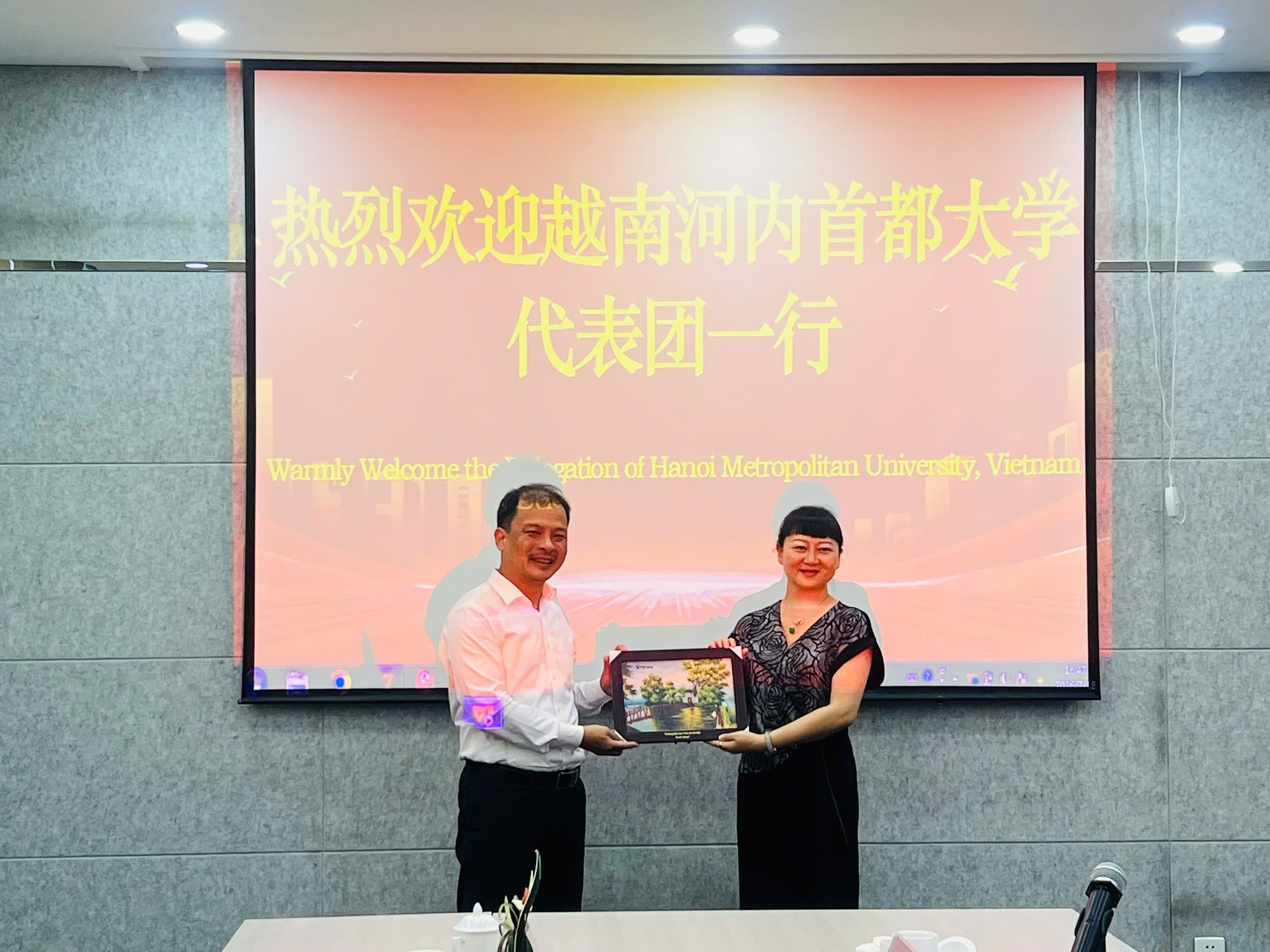
The Vice President emphasized that Kunming Chinese Language School has been a traditional partner accompanying Hanoi Metropolitan University for many years. The cooperation achievements in Chinese language training, academic exchange, and scholarship support have created an important foundation for both institutions to continue expanding their partnership toward a comprehensive, practical, and sustainable direction.
Representatives of Kunming Chinese Language School also expressed their desire to further promote the long-standing friendship between the two institutions, expand cooperation programs in training, scientific research, and cultural exchange, thereby contributing to strengthening educational connections between Vietnam and China.
From foreign language training cooperation to building a shared academic ecosystem
Sharing at the meeting, Assoc. Prof. Dr. Vu Cong Hao affirmed that Kunming Chinese Language School is one of the international partners that has made significant contributions to the training activities of Hanoi Metropolitan University. Over the years, the partner institution has provided scholarships for students majoring in Chinese Language to participate in short-term training courses lasting from two to four weeks, while also supporting lecturers in professional development programs in Kunming. In addition, Kunming Chinese Language School has provided textbooks, learning materials, and various professional support activities, contributing to improving foreign language training quality, creating opportunities for lecturers and students to experience an international learning environment and enhance intercultural communication competence.
Discussing future development orientations, Dr. Nguyen Thi Thanh Hue stated that the two institutions should continue expanding student and lecturer exchange programs, sharing digital learning resources, jointly organizing professional seminars, and researching flexible training programs that meet the requirements of modern education and the needs of the regional labor market.
Promoting Vietnam Studies, Vietnamese language training, and Vietnamese cultural promotion
One of the key areas receiving attention from both sides was expanding cooperation in Vietnam Studies, Hanoi Studies, and Vietnamese language training for international learners.
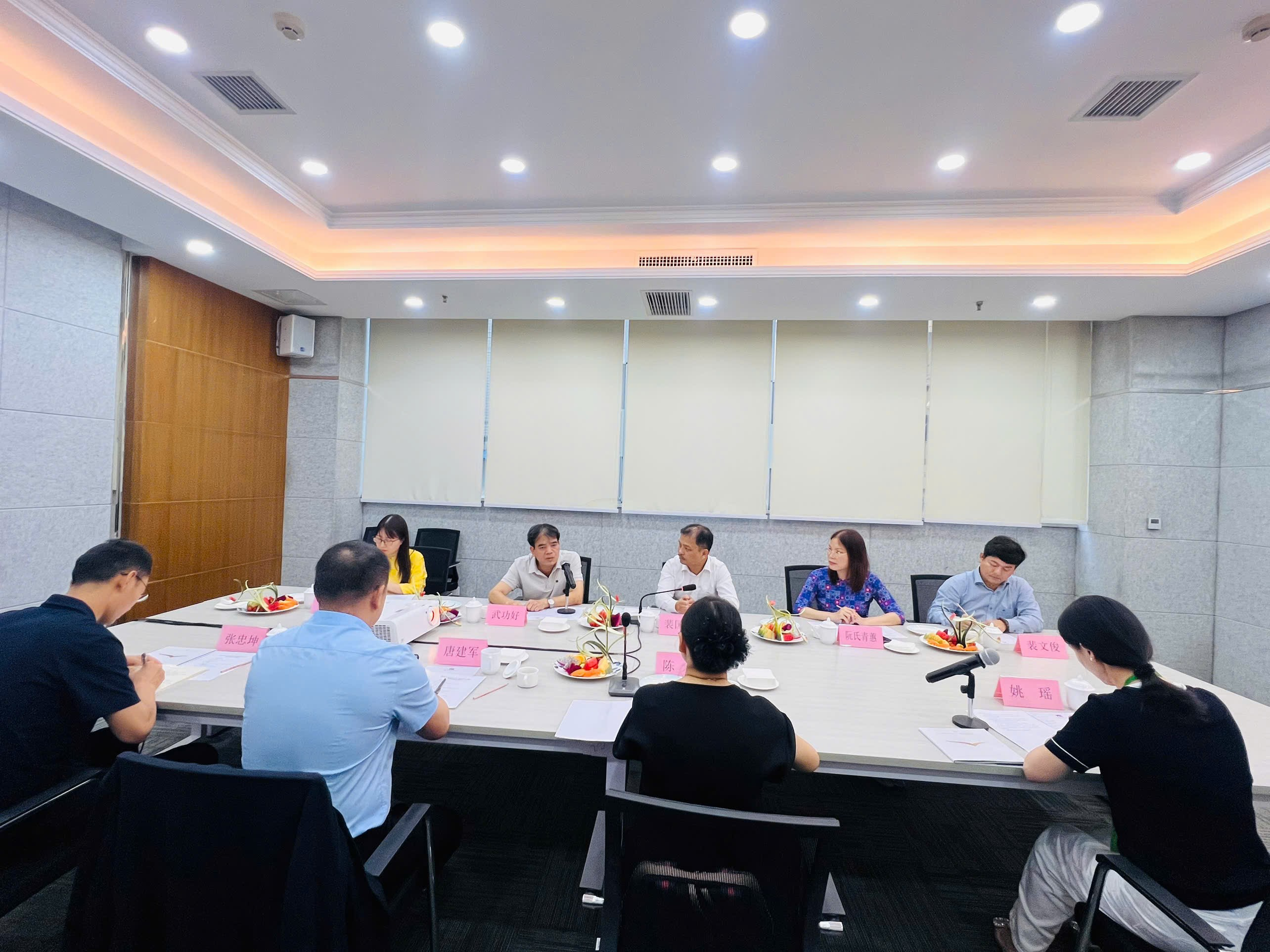
At the meeting, Dr. Bui Van Tuan – Vice Director of the Institute of Hanoi Studies and International Training proposed that the two institutions build upon the existing cooperation foundation to develop long-term collaborative programs in training, research, and academic exchange. Accordingly, both sides could coordinate in organizing international conferences on foreign language teaching methods in the context of digital transformation and artificial intelligence; developing joint research groups; exchanging lecturers and scholars; as well as jointly compiling textbooks, learning materials, and implementing research projects on language, culture, and education.
In particular, with the strengths of the Institute of Hanoi Studies and International Training, Dr. Bui Van Tuan expressed the hope that the two institutions would establish cooperation programs in language training for Vietnamese and Chinese students through short-term courses, international summer schools, student exchange programs, and cultural experience activities in both countries.
He also introduced the Vietnamese Language Training Program for foreigners developed by Hanoi Metropolitan University based on the Vietnamese Language Competency Framework, consisting of three levels and six proficiency bands from A1 to C2, combining language training with exploration of Vietnamese culture and Hanoi. The program aims to develop communication competence, adaptability in multicultural environments, and practical experiences, meeting the increasingly diverse learning needs of international learners.
According to Dr. Bui Van Tuan, cooperation in Vietnamese and Chinese language training between the two institutions not only contributes to improving educational quality but also serves as a form of cultural diplomacy, helping promote Vietnamese cultural values, strengthen mutual understanding between the peoples of the two countries, and train future bridges for Vietnam–China cooperation.
Connecting training with market development needs
From the perspective of application-oriented education, Dr. Dang Thi Minh Hien emphasized the increasingly important role of Chinese language proficiency for Tourism students in the context of growing economic and tourism exchanges between Vietnam and China.
Based on this practical demand, the two institutions can cooperate in developing specialized Chinese language training programs for tourism, organizing internships, professional field trips, destination surveys, and business-based experiential activities. Connecting foreign language training with professional education will help students simultaneously develop language ability, cultural understanding, and professional skills, enhancing their adaptability in the international labor market.
Towards practical, effective, and sustainable cooperation
The working session took place in an open, sincere, and cooperative atmosphere. Both sides highly appreciated the achievements gained in recent years and agreed to further concretize the contents of the Memorandum of Understanding through practical cooperation programs with clear roadmaps and implementation mechanisms.
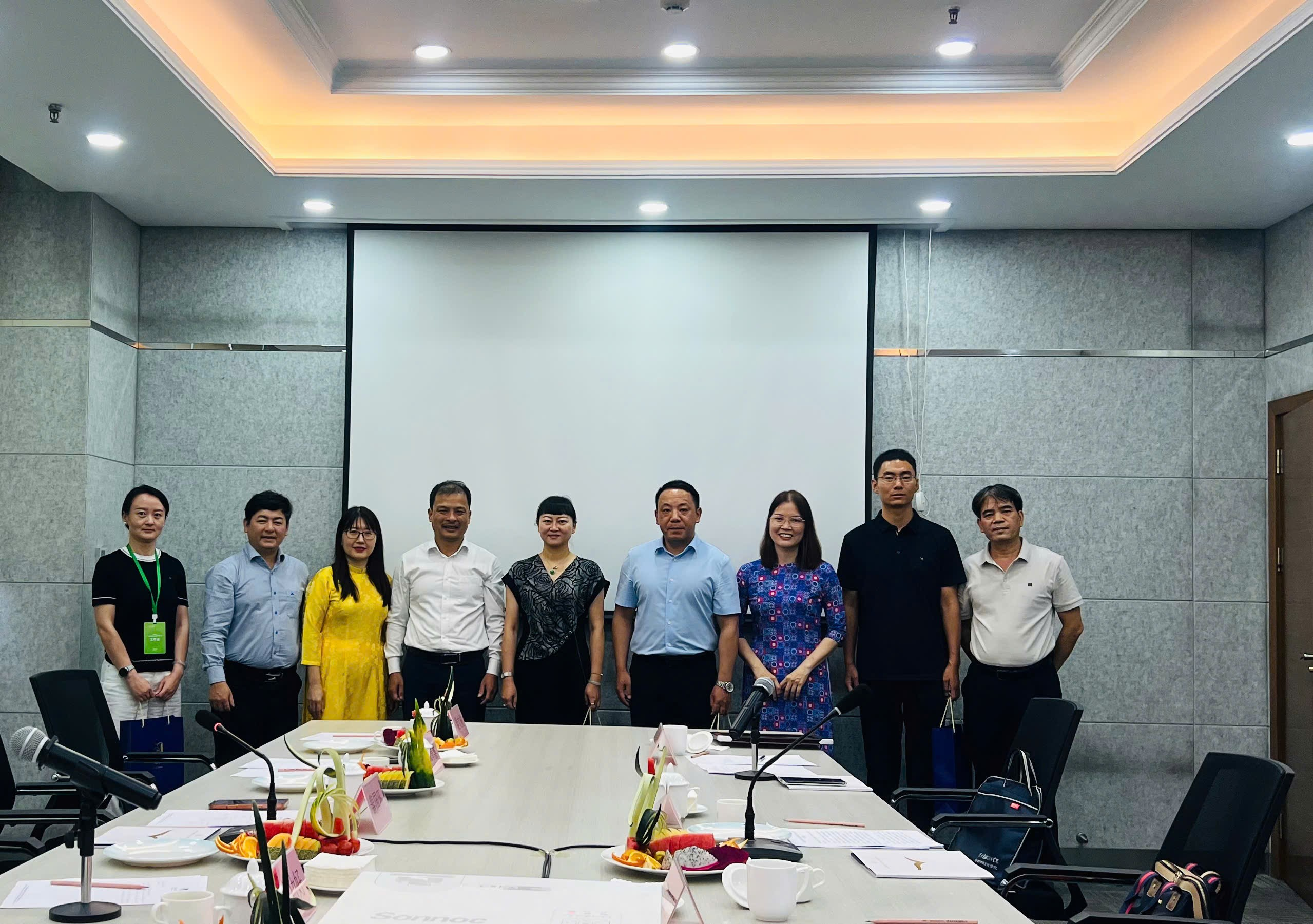
Beyond Chinese language training cooperation, the two institutions aim to build a comprehensive cooperation ecosystem in areas including education and training, scientific research, learning material development, lecturer and student exchanges, Vietnamese language training for foreigners, Vietnam Studies, Hanoi Studies, tourism, digital transformation, and cultural exchange.
The visit and working session of the Hanoi Metropolitan University delegation at Kunming Chinese Language School marked an important milestone in expanding the University’s international cooperation network. Based on trust, sharing, and mutual development, the two institutions are gradually building a cooperation model that not only serves the goal of improving educational quality but also contributes to promoting people-to-people exchanges, connecting knowledge, and strengthening the friendship between Vietnam and China.
This is also a testament to the development orientation of Hanoi Metropolitan University: taking international integration as a driving force, educational quality as the foundation, and culture as a bridge toward building a modern, open, and sustainable educational environment, making positive contributions to the development of Hanoi and educational cooperation in the region.
Bùi Văn