DELEGATION OF HANOI METROPOLITAN UNIVERSITY VISITS THE HO CHI MINH MEMORIAL SITE IN LIUZHOU
The visit was a meaningful activity during the University’s working journey, demonstrating deep respect and gratitude for President Ho Chi Minh while providing an opportunity to gain a deeper understanding of historical sites associated with his revolutionary activities in Guangxi, as well as the enduring foundations of the Vietnam–China friendship.
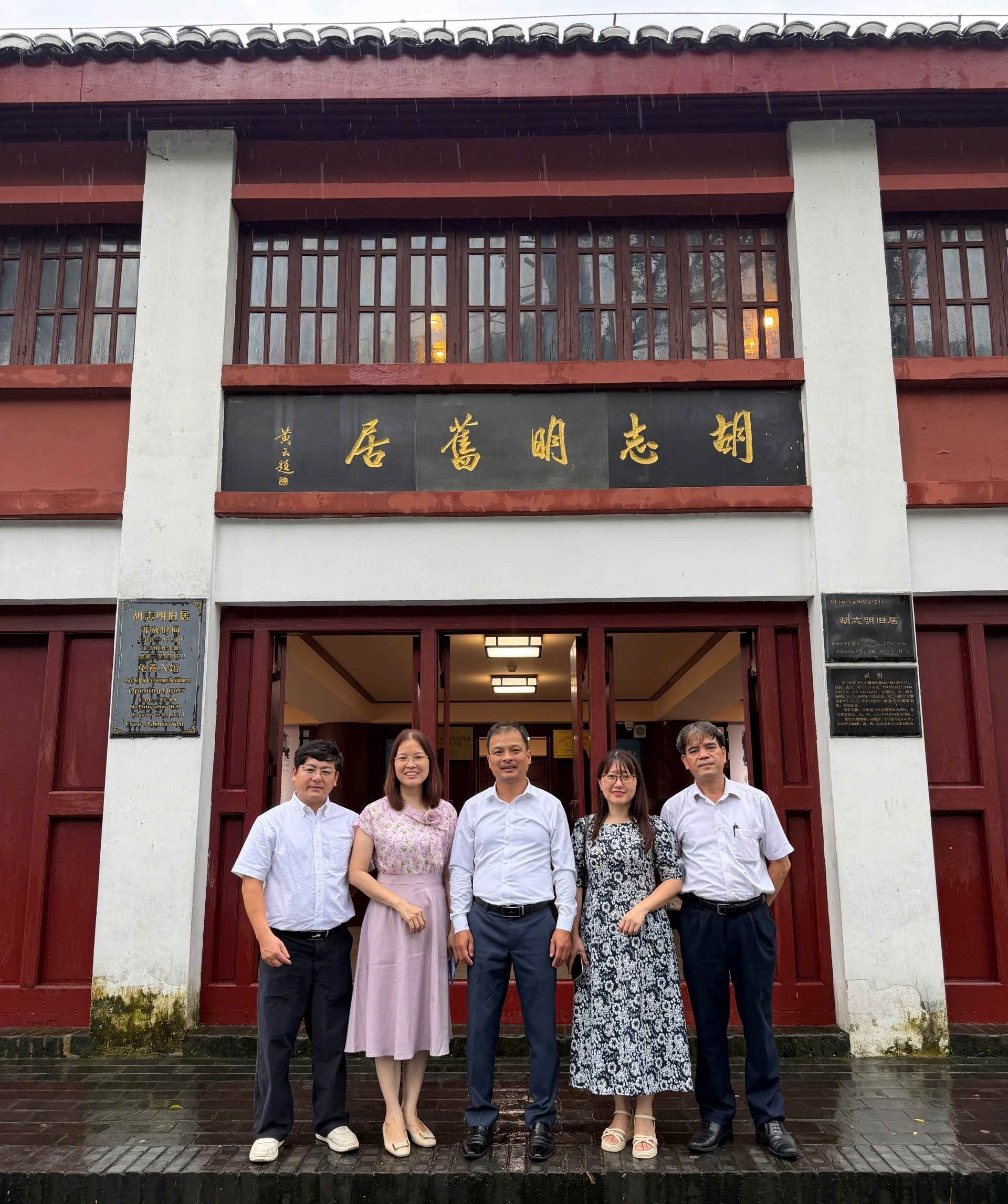
Liuzhou is one of the important locations associated with President Ho Chi Minh’s revolutionary activities in China. The memorial site, also known as the “Former Residence of Ho Chi Minh,” is located at No. 2-1 Liushi Street, in the old quarter of Liuzhou City, opposite Yufeng Mountain – the place associated with his poem “Newly Released from Prison, Practicing Mountain Climbing”.
The building was constructed around 1930, featuring a traditional brick-and-wood architectural structure with two floors. In the 1940s, it was formerly known as the Nanyang Hostel. According to historical materials displayed at the site, President Ho Chi Minh stayed here and carried out many important revolutionary activities in Liuzhou during the period of 1943–1944.
This was also the period when he had just endured years of imprisonment by the Kuomintang authorities in various prisons across Guangxi. After being released, despite continuing to operate under extremely difficult conditions, he remained determined to seek international support, establish connections with revolutionary forces, and prepare essential conditions for Vietnam’s national liberation movement. Documents preserved by the Ho Chi Minh Museum indicate that Liuzhou was closely associated with many significant activities and milestones in President Ho Chi Minh’s revolutionary journey.
A Space Preserving the Memory of a Great Yet Simple Leader
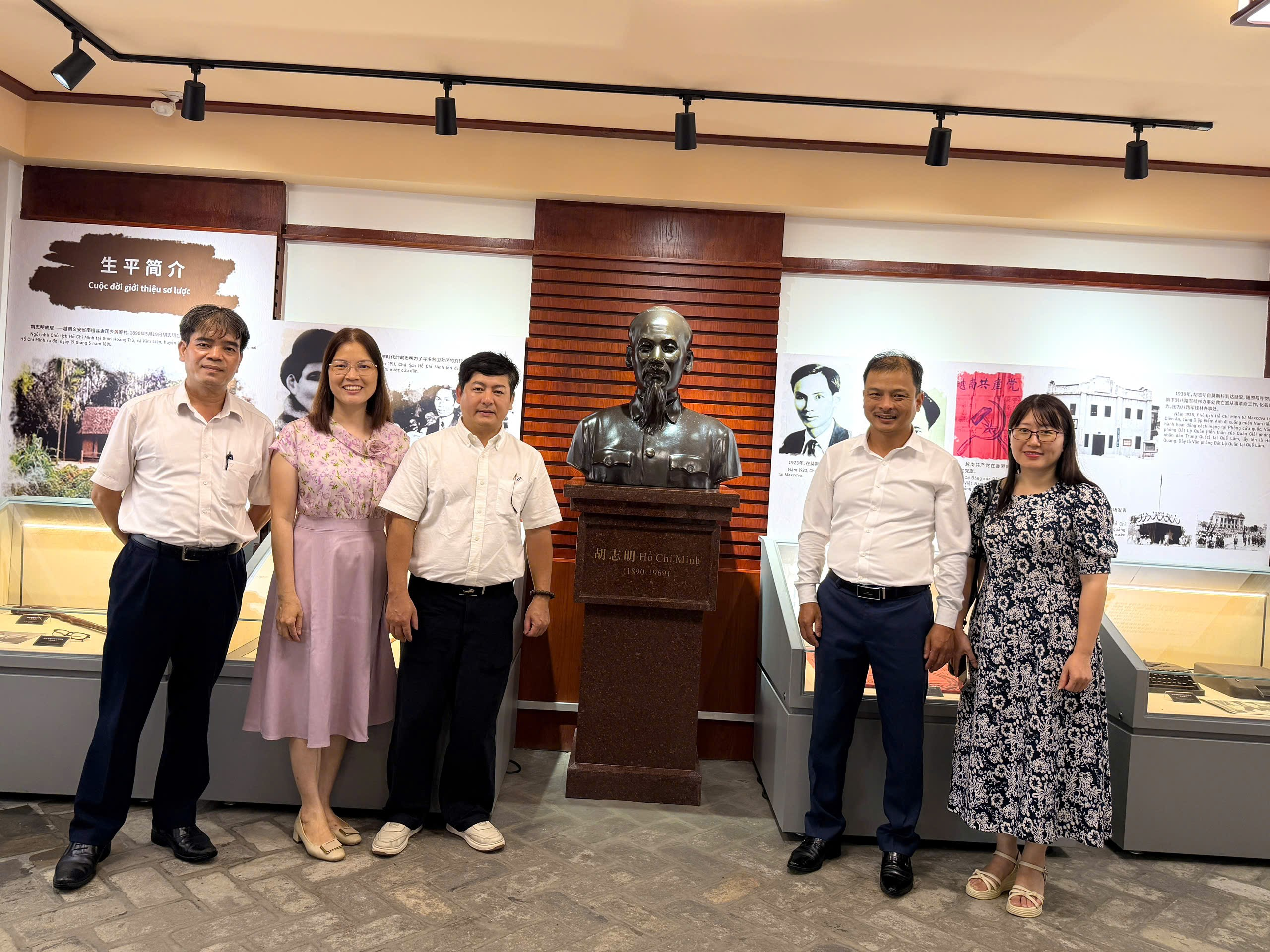
At the memorial site, the delegation respectfully paid tribute to President Ho Chi Minh and visited the exhibition space introducing his life and revolutionary career, particularly his years of activities in Liuzhou and Guangxi.
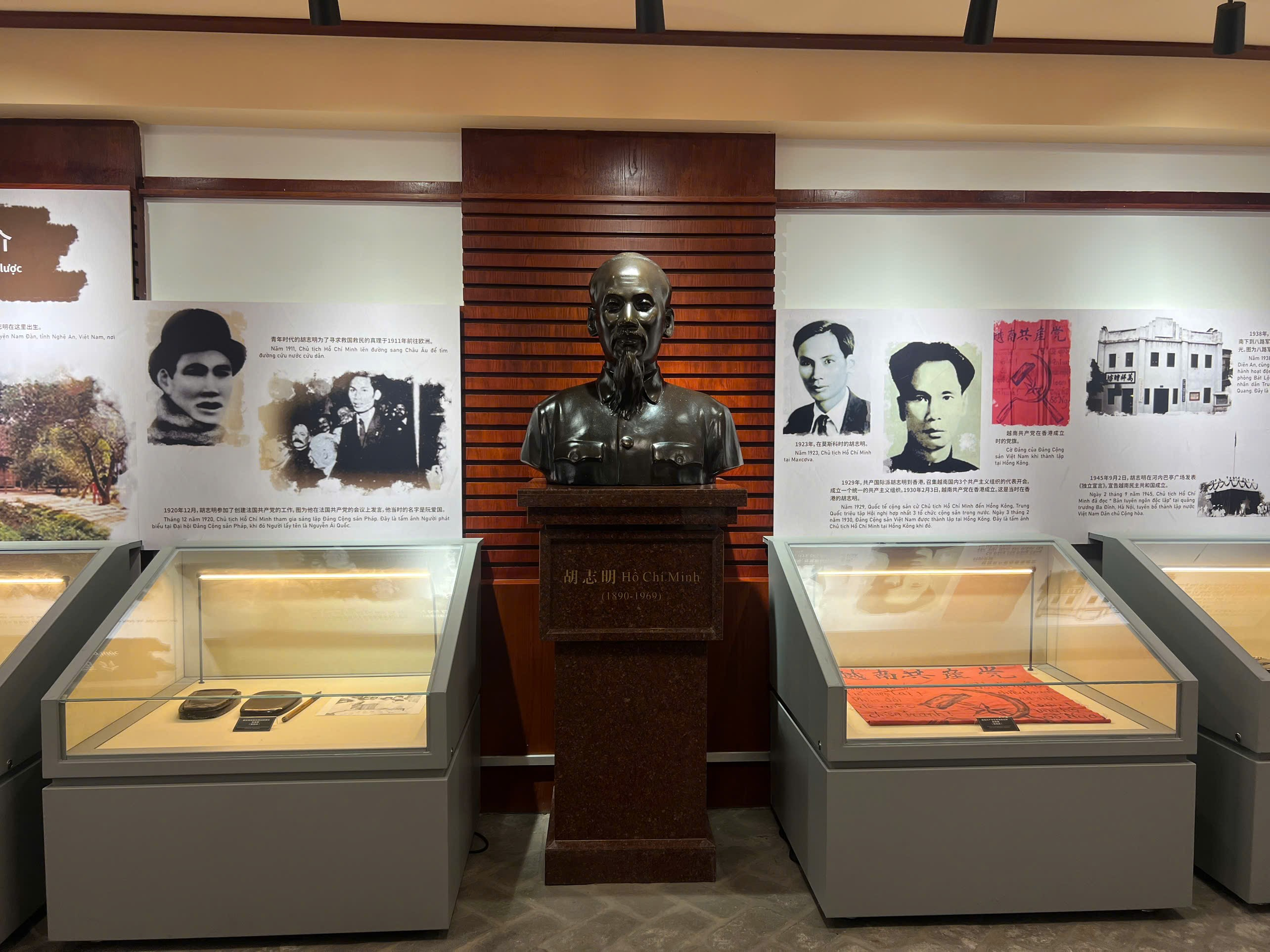
The first floor presents an overview of President Ho Chi Minh’s background, life, and revolutionary career. At the center of the exhibition area is a bronze bust of President Ho Chi Minh, surrounded by documents, photographs, and artifacts reflecting his persistent struggle for national independence, freedom, and happiness for the people.
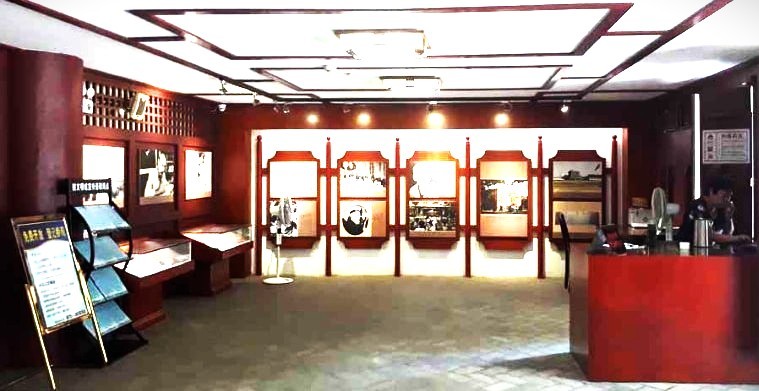
The second floor recreates the room where President Ho Chi Minh once lived and worked. Within the modest space, simple items such as a wooden bed, desk, chairs, and washing utensils, together with documents and photographs, evoke his humble lifestyle, dedicated working spirit, and unwavering revolutionary determination. The memorial site currently preserves many manuscripts, photographs, and artifacts related to President Ho Chi Minh’s activities in Liuzhou.
Standing before these simple objects, members of the delegation gained a deeper appreciation of the great stature of a leader who devoted his entire life to the cause of national liberation. Despite hardships, imprisonment, and countless challenges, President Ho Chi Minh maintained his optimism, faith in revolutionary victory, and aspiration for independence and freedom for the Vietnamese people.
A Historical Site Symbolizing Vietnam–China Friendship
The Ho Chi Minh Memorial House in Liuzhou is not only a place marking President Ho Chi Minh’s revolutionary activities but also a vivid symbol of the close relationship between the Vietnamese and Chinese peoples.
The site has been preserved, renovated, and promoted by local authorities and people over many years. The memorial was recognized as a local cultural heritage site in the 1990s; the exhibition space on President Ho Chi Minh’s revolutionary life officially opened in 2002 and was later included in China’s list of nationally protected cultural relics. The continued preservation and public introduction of the memorial demonstrate the respect of the Chinese authorities and people for President Ho Chi Minh as well as for the shared historical values in the relationship between the two countries. The Ho Chi Minh Museum has also recognized the preservation and promotion of revolutionary sites related to President Ho Chi Minh in Liuzhou, considering them valuable destinations for visitors, researchers, and educational activities.
Each document and artifact displayed here not only recounts a period in President Ho Chi Minh’s revolutionary life but also reflects the solidarity, support, and cooperation between the peoples of Vietnam and China during the struggle for national independence. Therefore, the memorial has gone beyond the meaning of a commemorative site to become a shared space of historical memory, contributing to the cultivation of friendship, understanding, and trust between the two nations.
Educational Values from a Journey Back to History
For the delegation of Hanoi Metropolitan University, the visit to the Ho Chi Minh Memorial House was not only a commemorative activity but also a valuable historical and cultural learning experience.
In higher education, history is not only conveyed through textbooks, lectures, or archival materials. History can also be experienced through specific spaces where every artifact, room, and historical trace connects the past with the present, helping learners gain deeper awareness of the values of independence, freedom, and responsibility of today’s generations. The visit offered meaningful implications for the University’s training, scientific research, and traditional education activities. Historical sites related to President Ho Chi Minh in Guangxi can become valuable resources for research in Vietnamese studies, history, culture, international relations, and people-to-people exchanges. They can also serve as experiential learning spaces for lecturers and students participating in international exchange and research programs.
For a higher education institution located in Hanoi – the capital city where President Ho Chi Minh lived and worked for many years – exploring his historical footprints in Liuzhou carries special significance. This journey connects historical spaces from Guangxi to Hanoi, from his revolutionary activities abroad to the period when he led the Vietnamese people in gaining independence and building a new Vietnamese state.
Strengthening the Humanistic Foundation for International Cooperation
The visit to the Ho Chi Minh Memorial House took place during the delegation’s implementation of educational cooperation activities in Guangxi. Alongside discussions on training, scientific research, lecturer and student exchanges, and human resource development, the activity added cultural and historical depth to the University’s international engagement journey. Sustainable international cooperation is not built only through agreements, programs, or professional projects, but also through historical understanding, respect for shared values, and friendship among peoples. Visiting historical sites associated with President Ho Chi Minh in China provided an opportunity for the delegation members to better understand the historical foundation of Vietnam–China relations, thereby recognizing more deeply the role of education in continuing to preserve, strengthen, and develop the relationship between the two countries.
Leaving the Ho Chi Minh Memorial House in Liuzhou, each member of the delegation carried with them emotions, gratitude, and pride in the beloved leader of the Vietnamese nation. The visit was not merely a return to a historical milestone but also a reminder of the responsibility of today’s generations to preserve historical memory, promote Ho Chi Minh’s ideology, morality, and style; while continuing to foster friendship, enhance people-to-people exchanges, and build increasingly profound, substantive, and sustainable Vietnam–China cooperation.
Article and photos: Bui Van – Thanh Hue