National Scientific Conference: “Making English a Second Language in Schools: Opportunities and Challenges for Teacher Education Institutions”
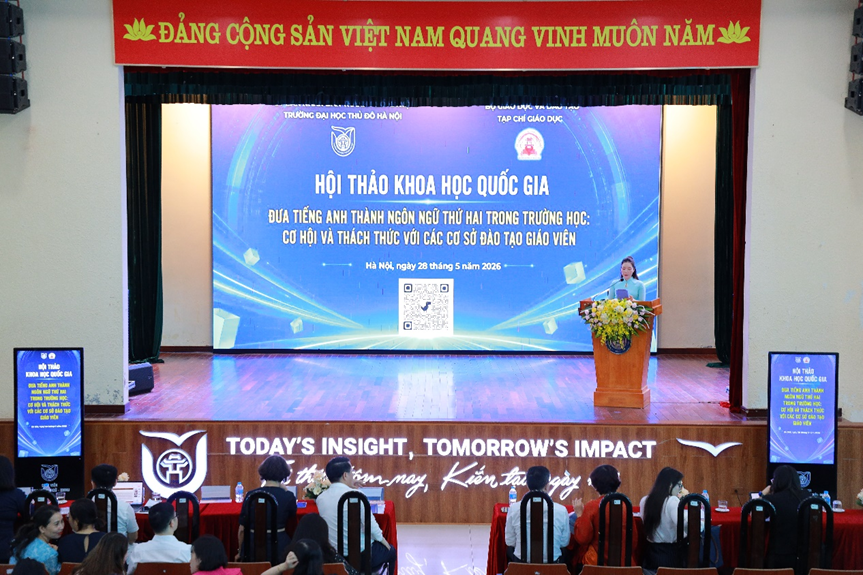
Overview of the Conference.
On the morning of May 28, Hanoi Metropolitan University, in collaboration with the Journal of Education, organized the National Scientific Conference entitled: “Making English a Second Language in Schools: Opportunities and Challenges for Teacher Education Institutions.”
The conference was organized to exchange research findings, practical experiences, and proposed solutions to enhance the effectiveness of English teaching and learning in educational institutions; while also contributing to the realization of the goal of improving foreign language proficiency among pupils and students in the era of international integration.
Attending the conference, representing the co-organizing institution were Assoc. Prof. Dr. Nguyen Tien Trung, Editor-in-Chief of the Journal of Education – Ministry of Education and Training; Assoc. Prof. Dr. Ha Van Dung, Deputy Editor-in-Chief of the Journal of Education – Ministry of Education and Training; Dr. Nguyen Thi Mai Huu, Head of the National Foreign Languages Project Management Board, Ministry of Education and Training; together with numerous experts and researchers in the field of education and foreign language teaching.
Representing Hanoi Metropolitan University were Assoc. Prof. Dr. Nguyen Van Tuan, Vice Rector of the University; Dr. Tran Thi Ha Giang, Dean of the Faculty of Education; along with leaders of various units, lecturers, and students of the University.
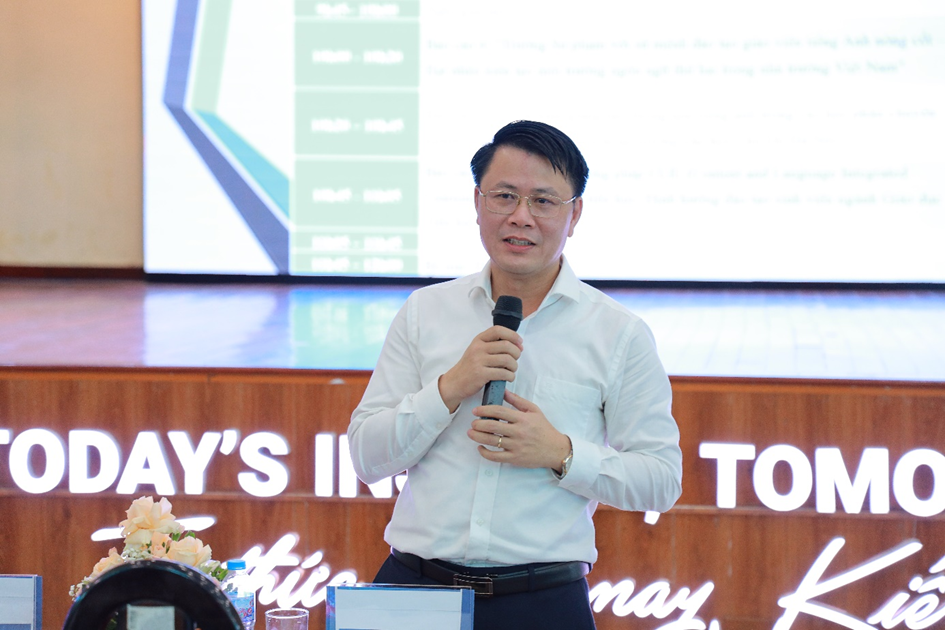
Assoc. Prof. Dr. Nguyen Van Tuan, Vice Rector of the University, delivering the opening remarks at the conference.
In his opening remarks, Assoc. Prof. Dr. Nguyen Van Tuan, Vice Rector of the University, stated that in the era of globalization, English should not only serve as a subject but also become a tool for communication, learning, and international connection for learners. According to him, creating an environment in which English is regularly used within schools will help pupils and students develop natural language reflexes, increase confidence, and enhance their ability to integrate internationally.
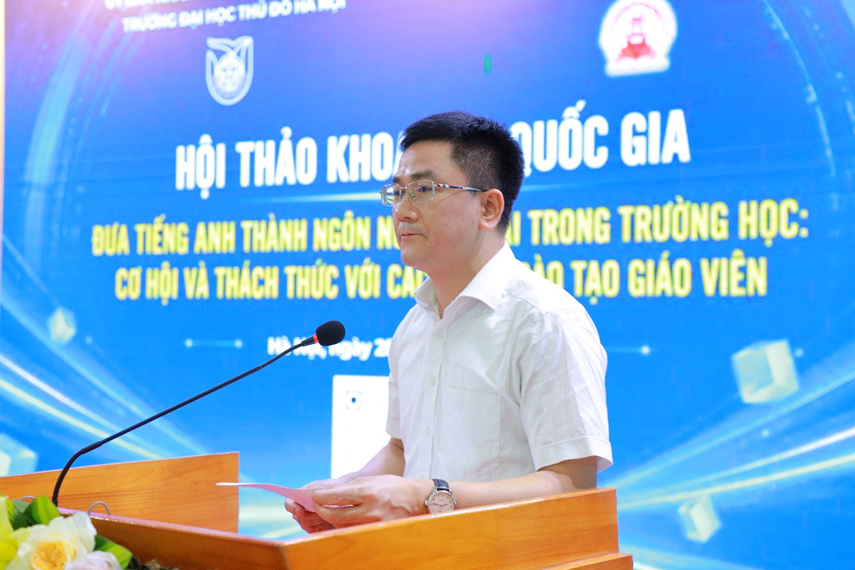
Assoc. Prof. Dr. Ha Van Dung, Deputy Editor-in-Chief of the Journal of Education, speaking at the conference.
Assoc. Prof. Dr. Ha Van Dung, Deputy Editor-in-Chief of the Journal of Education, noted that the Organizing Committee had received more than 100 papers from experts, scientists, and educators nationwide; among them, 70 high-quality papers were submitted to the Journal of Education for further peer review and consideration for publication. The collection of papers, reports, and presentations submitted to the conference has provided a comprehensive academic picture with significant scientific and practical value on the theme “Making English a Second Language in Schools: Opportunities and Challenges for Teacher Education Institutions.”
At the conference, participants focused on discussing a wide range of topics, including solutions for creating English-speaking environments in schools; the application of technology and artificial intelligence in foreign language teaching; innovation in English teaching methods toward enhanced communication; the role of teachers in fostering positive foreign language learning environments; and experiences in implementing effective English learning models in educational institutions.
Many presentations also addressed the trend of internationalizing education, the need to develop global citizenship skills, and students’ adaptability in today’s multilingual learning and working environments.
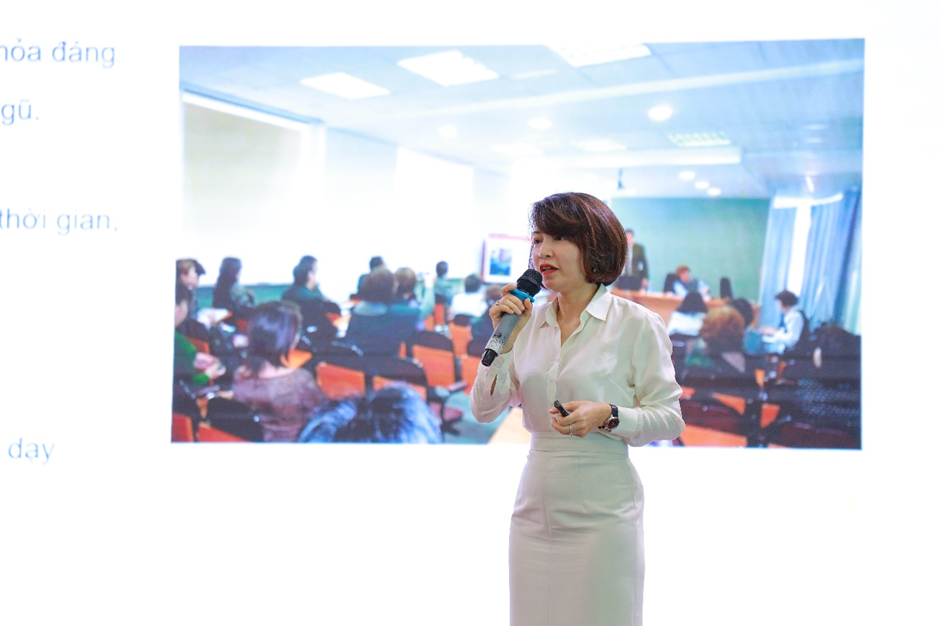
Dr. Nguyen Thi Mai Huu, Head of the National Foreign Languages Project Management Board, Ministry of Education and Training, presenting her paper.
In her presentation, Dr. Nguyen Thi Mai Huu, Head of the National Foreign Languages Project Management Board under the Ministry of Education and Training, analyzed the roadmap for implementing the policy of making English a second language in schools across Hanoi through two phases: piloting high-quality education models (integrating the Cambridge curriculum) and expanding implementation to private school systems. On that basis, she evaluated key achievements, candidly identified core challenges, and proposed strategic solutions to promote the roadmap in a substantive and sustainable manner.
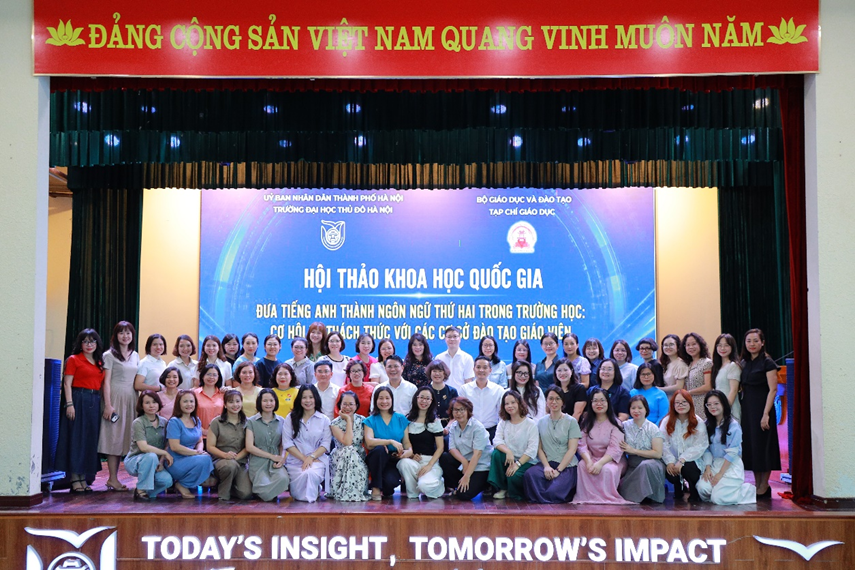
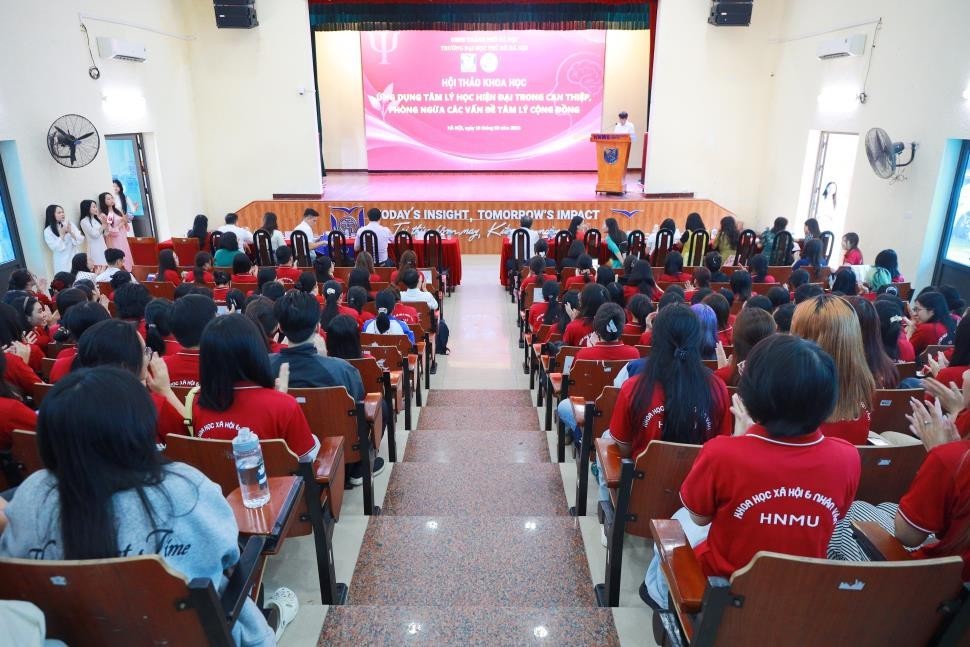
Delegates attending the conference.
With more than 100 papers submitted, the National Scientific Conference “Making English a Second Language in Schools: Opportunities and Challenges for Teacher Education Institutions” truly served as a forum for scientists, administrators, education experts, lecturers, and students to exchange practical experiences and propose systematic solutions aimed at improving the effectiveness of English teaching and training. In doing so, it contributes to advancing the journey of making English a second language in schools.
The National Scientific Conference not only provided an academic forum for scientists, experts, and lecturers to exchange experiences and share solutions but also contributed to promoting innovation in foreign language education within teacher education institutions. Through this event, Hanoi Metropolitan University further affirmed its role in accompanying the education sector in implementing goals to enhance foreign language proficiency and meet the demands for high-quality human resources in the era of international integration.